
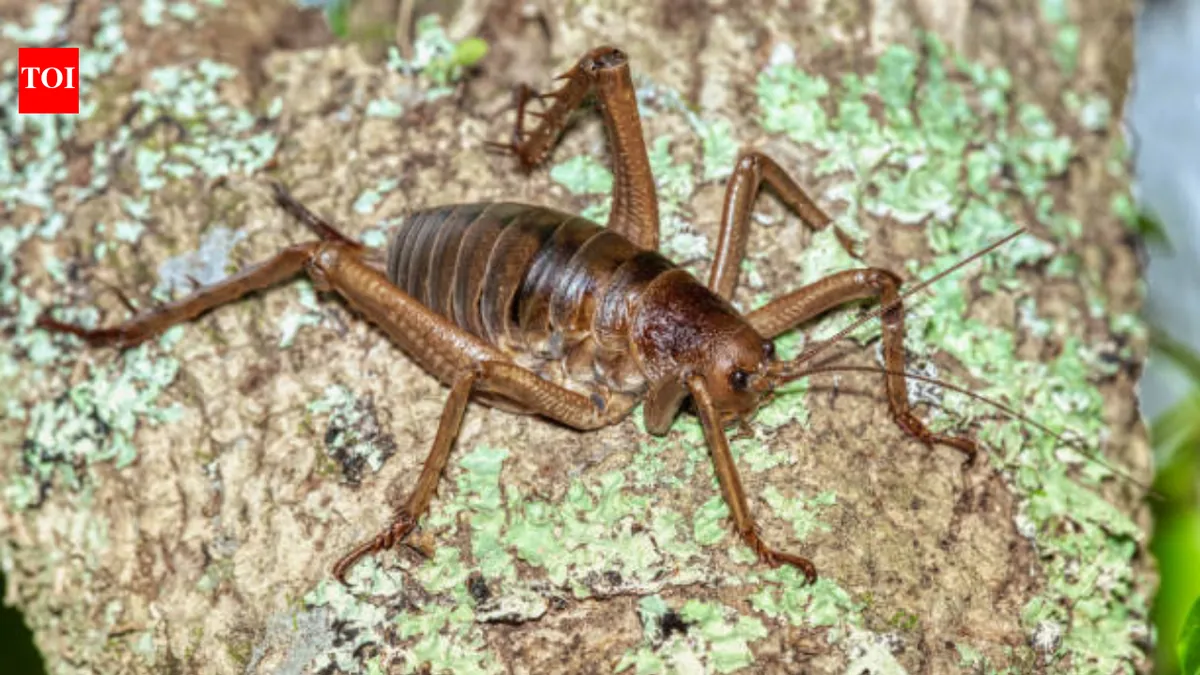
Conservationists have moved more than 11,000 insects to 10 sites over 15 years. At least four generations of wētāpunga have now been born in the wild on Motuora and Tiritiri Matangi islands.
The wētāpunga, New Zealand’s largest giant wētā species, once lived across parts of the North Island. Land clearing and introduced predators, including rats and stoats, drove it off the mainland. The species survived naturally only on Te Hauturu-o-Toi, also known as Little Barrier Island.
By the 1990s, the wētāpunga was considered endangered. The remaining population was too small for direct translocations, so conservationists first established a captive-breeding programme. A small number of insects were taken from Little Barrier to Butterfly Creek, where staff developed reliable breeding methods. Auckland Zoo later set up a second breeding colony.
The first captive-bred insects were released on Motuora Island in 2010 and on Tiritiri Matangi a year later. Over the next 15 years, conservation teams carried out 45 translocations, releasing more than 11,000 wētāpunga at 10 sites. At least four generations have since been born in the wild on the two islands. That suggests the populations are reproducing without relying on continued releases from breeding facilities.
The species’ conservation status has improved. It was listed as “Threatened Nationally Endangered” in 2004 and as “Threatened Nationally Increasing” in 2022. Community conservation groups helped raise funds, organise releases and monitor the insects. Ngāti Manuhiri, the iwi that serves as kaitiaki and mana whenua of Little Barrier Island, supported the programme and regards the wētāpunga as a taonga species.
Females can weigh about as much as a mouse. The insect’s body can reach roughly 10 centimetres, and its legs can span about 20 centimetres. Despite its size, the wētāpunga remains vulnerable to introduced predators and habitat changes.
New Zealand’s Department of Conservation said the programme’s results were documented in a paper in the New Zealand Journal of Zoology. Co-author Chris Green said the breeding and translocation methods could help conservation work for other threatened invertebrates. They are already informing efforts to protect the Māhoenui giant wētā, and may also help with native beetles.