
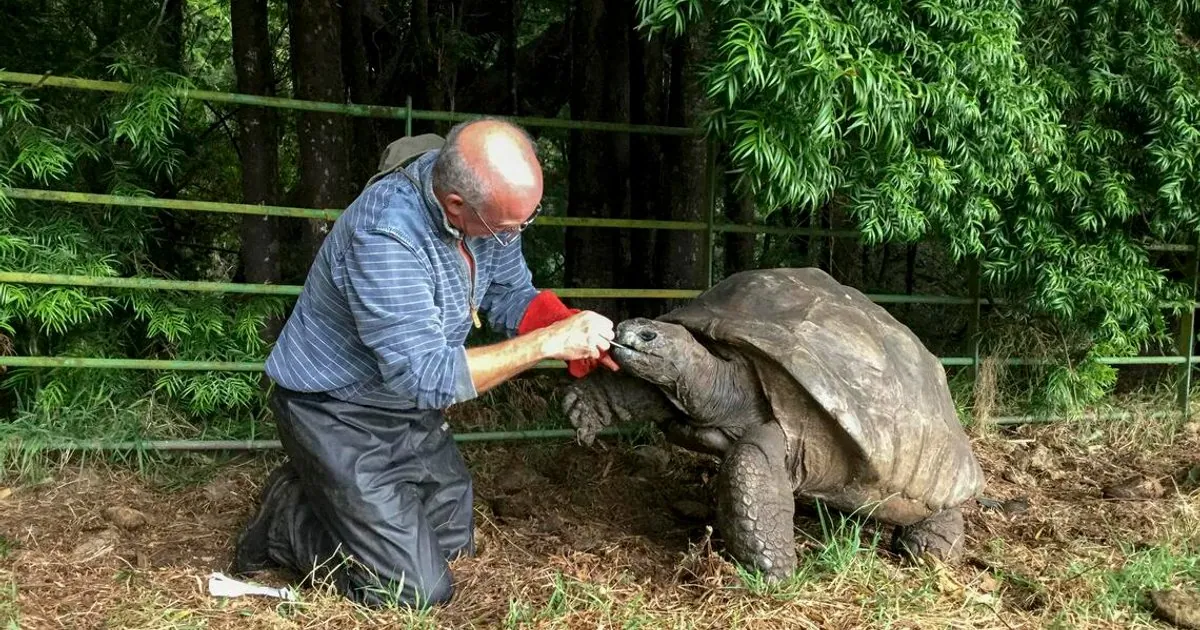
Researchers studied the genome and epigenome of Jonathan, an Aldabra giant tortoise considered the world's oldest-known land animal. They found features linked to DNA repair and cell function, but cannot yet say whether these findings explain his extraordinary lifespan.
Jonathan has lived on St Helena since 1882. Scientists compared his epigenome — chemical markers that regulate gene activity — with that of four other tortoises of the same species. In some regions linked to longevity, Jonathan's markers showed less disorder than those of every tortoise in the study except a five-year-old juvenile.
Researchers also found 287 gene variants unique to Jonathan. Some are linked to tumour suppression and DNA repair. He carries extra copies of a gene that encodes a protein involved in detecting ageing and cancerous cells. The team took a sample from beneath his tongue because St Helena officials limit blood draws to reduce infection risks.
The researchers said one exceptionally old tortoise cannot show whether these traits explain its lifespan. His living conditions may also matter. Jonathan is kept on a tropical island and receives a diet managed by veterinarians. Cataracts have left him mostly blind, but his veterinarian, Joe Hollins, says he still has a strong appetite.