
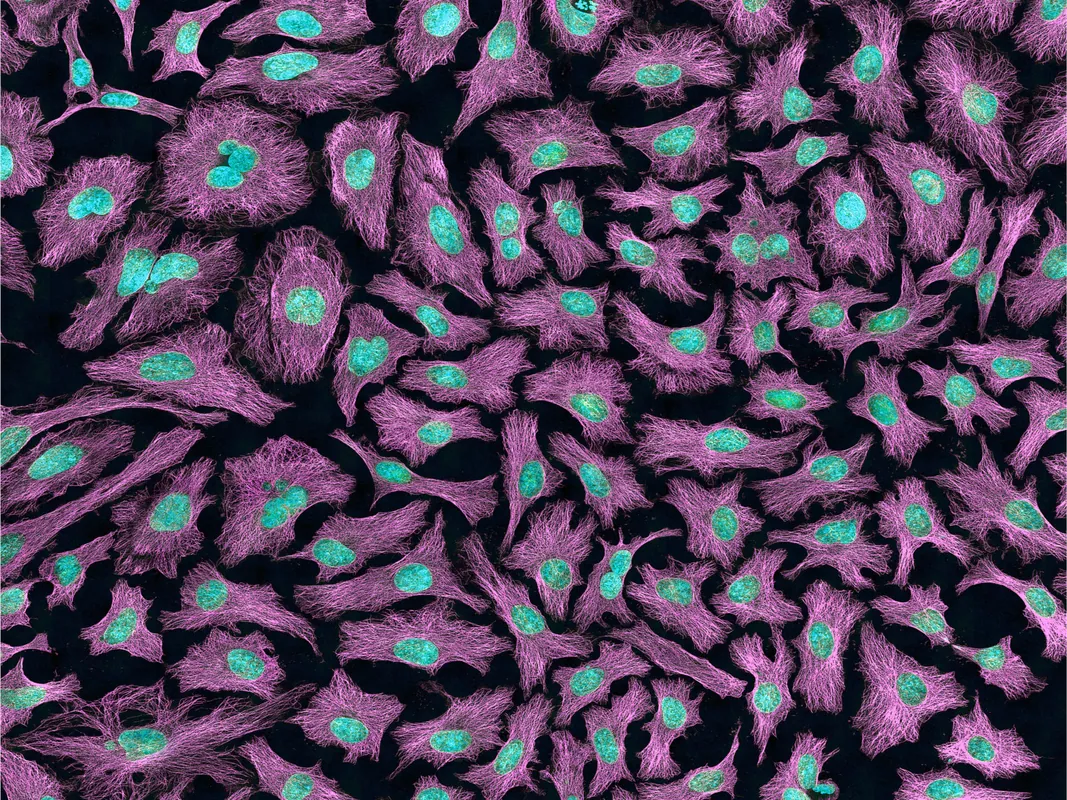
A dispute over the winning Nikon Small World in Motion video has renewed scrutiny of how algorithms alter microscopy data. Nikon is reviewing the creator’s materials as researchers stress the need to preserve originals and disclose processing.
Researcher Ning Xu won first place in Nikon’s Small World in Motion competition in September with a microscopic video of cilia in an airway sample from a child with primary ciliary dyskinesia, an inherited disorder that affects cilia movement and respiratory function. After the results were announced, microscopy specialists questioned whether some details were biologically plausible, including elements they said appeared to emerge and disappear.
Xu said artificial intelligence was not used to generate the original footage, the cilia or their movement. He said algorithms were later applied to grayscale microscopy data to highlight similar structures and add color for presentation. The use of AI alone does not show that the video was generated or falsified.
Algorithms are already used to reduce noise, improve resolution, correct motion and reconstruct images from incomplete data. Scientific reliability depends on whether processing adds information that was not present in the original measurements. An algorithm can produce convincing structures without enough experimental evidence. Research in medical imaging warns that such systems can add features that do not exist or remove real ones, and the changes may be hard for observers to detect.
A scientific image is expected to represent a phenomenon that can be examined and reproduced. Authors should disclose the tools used and provide original images on request. Researchers in Nature Methods have also proposed guidance to improve clarity and reproducibility, including documentation of image processing and analysis.
Nikon said it was reviewing the information Xu submitted during the initial assessment as well as additional technical material about the equipment, imaging methods and processing. The question is therefore not only whether AI was used — Xu has confirmed that it was — but how the algorithm changed the data after capture. As AI spreads in scientific and medical imaging, researchers, editors and contest organizers may need to track the full path from original measurement to final image and establish whether each visible detail can be tied back to real data.