
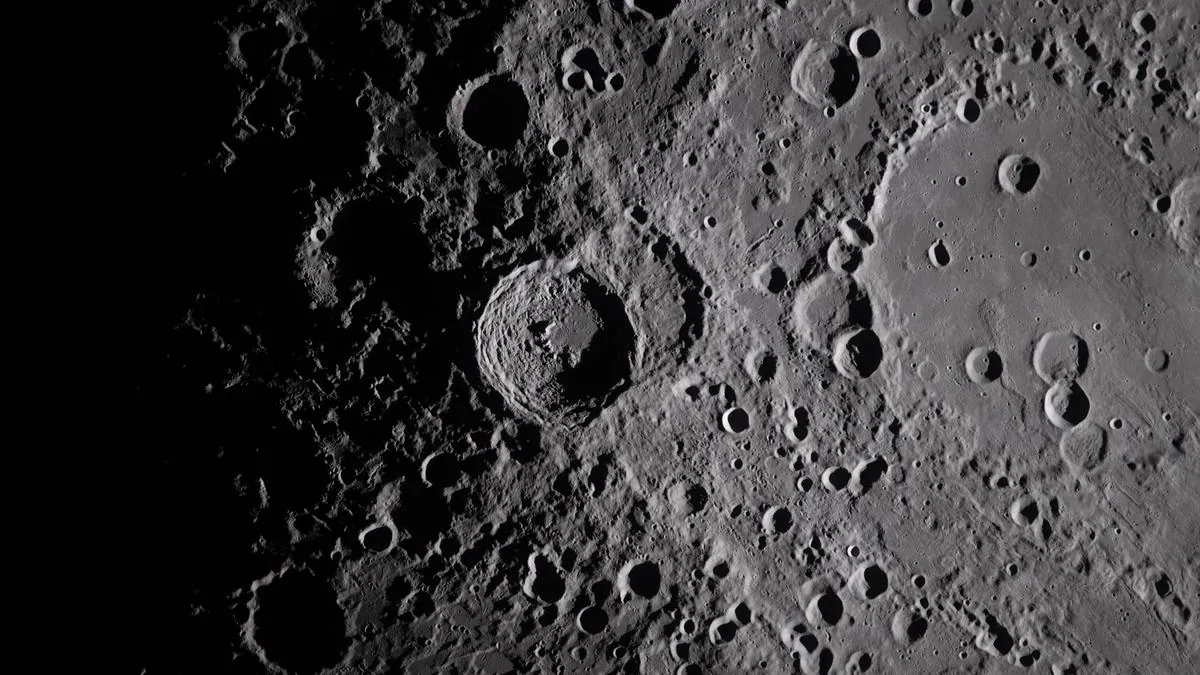
NASA is targeting a reactor near the lunar south pole by 2030. Reliable power could support long stays, but the scarcity of suitable sites gives the project a geopolitical dimension.
NASA plans to place a 20-kilowatt reactor near the Moon’s south pole by 2030. Russia is developing a roughly 10-kilowatt system for the China-led International Lunar Research Station. Nuclear power can generate electricity independently of sunlight, an advantage for missions that need heating, life support and rover charging.
At most lunar locations, daylight lasts about two weeks before a two-week night. Near the south pole, permanently shadowed craters contain water ice while nearby high ground can receive sunlight. Some shadowed areas fall below minus 200 degrees Celsius. Ice could provide water and potentially hydrogen and oxygen for rocket propellant. NASA scientists estimated that producing 10 tonnes of oxygen would require about 68 kilowatts.
Suitable sites are scarce because they need a useful combination of light, safe landing terrain and access to ice-filled craters. A NASA-commissioned study recommended placing reactors at least one kilometre from people. That further limits possible locations and could sharpen competition among countries seeking a long-term presence near the south pole.
The 1967 Outer Space Treaty bars countries from claiming territory on the Moon. The Artemis Accords provide for temporary safety zones to prevent harmful interference while preserving free access. The analysis warns, however, that placing reactors, landing pads, mines and habitats close together could give one country or coalition a practical advantage.
Construction would require shielding the reactor with equipment brought from Earth or materials made on the Moon, along with deployment machinery and power cables. The reactor core must be launched unirradiated. Once operating, the system would need to release large amounts of waste heat and withstand lunar dust. An accident could contaminate some of the limited areas most valuable to future missions.
Nuclear power may eventually be necessary for a mature lunar economy, but no such economy exists today. The analysis highlights the risk that governments could deploy reactors mainly to get ahead of rivals while major technical, environmental and legal questions remain.