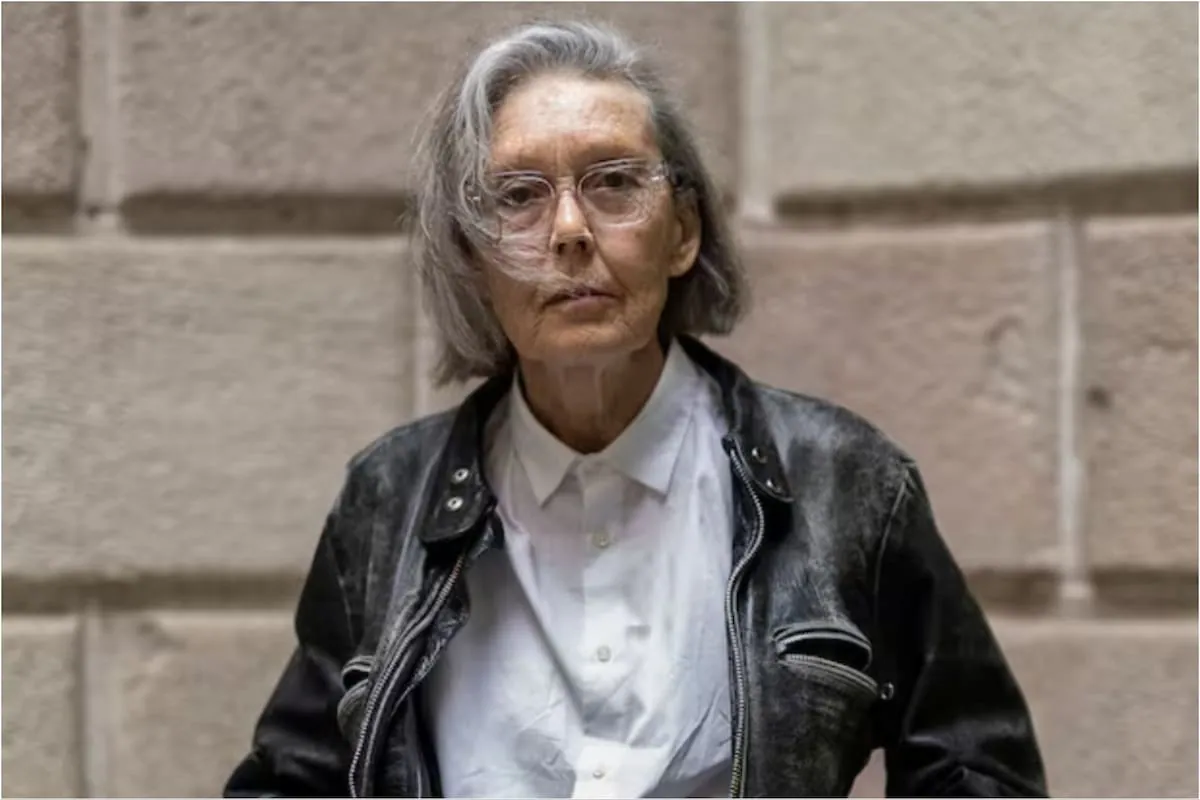
The Swedish Academy has awarded the 2026 Nobel Prize in Literature to Canadian poet and essayist Anne Carson. Her book The Beauty of the Husband is a fictional essay in 29 “tangos” that blends poetry with literary reflection.
The Academy cited Carson’s bold, inventive work and its playful dialogue with the classical tradition. The Associated Press reports that she often sets ancient material alongside modern subjects and blurs the boundaries between verse and prose.
An essay on Carson published by La Nación treats her writing as both a continuation of earlier texts and a challenge to literary conventions. The writer links that approach to Carson’s academic study of classical literature and points to influences ranging from John Keats and Virginia Woolf to Marcel Proust and Simone Weil.
In The Beauty of the Husband, Carson builds a narrative from 29 sections she calls tangos. The book combines verse, essay-like reflection and references to other works. That layering, the La Nación essay argues, makes it difficult to place the book in a single genre.
The La Nación writer notes that Carson studied classical philology and wrote her doctoral thesis on Sappho. Yet her books draw on more than antiquity. The essay traces a literary constellation that also includes the Romantics, modernists, philosophy and religious texts.
The essay also highlights Carson’s flexible punctuation, unusual syntax, fractured lyric forms and use of mixed genres. It presents these features as a way of engaging with literary history and creating new connections between texts rather than as experiments for their own sake.
The essay’s conclusion returns to the idea of the palimpsest. In this reading, new writing is always in dialogue with what has already been created, and literary quality depends in part on the depth of its references. That interpretation echoes the Academy’s emphasis on Carson’s engagement with the classical tradition.
The Swedish Academy’s citation likewise says Carson creates new forms for contemporary literature through dialogue with the classical tradition. An article published by El País on the day of the award describes her work as a blend of poetry, essay and classical sources.