
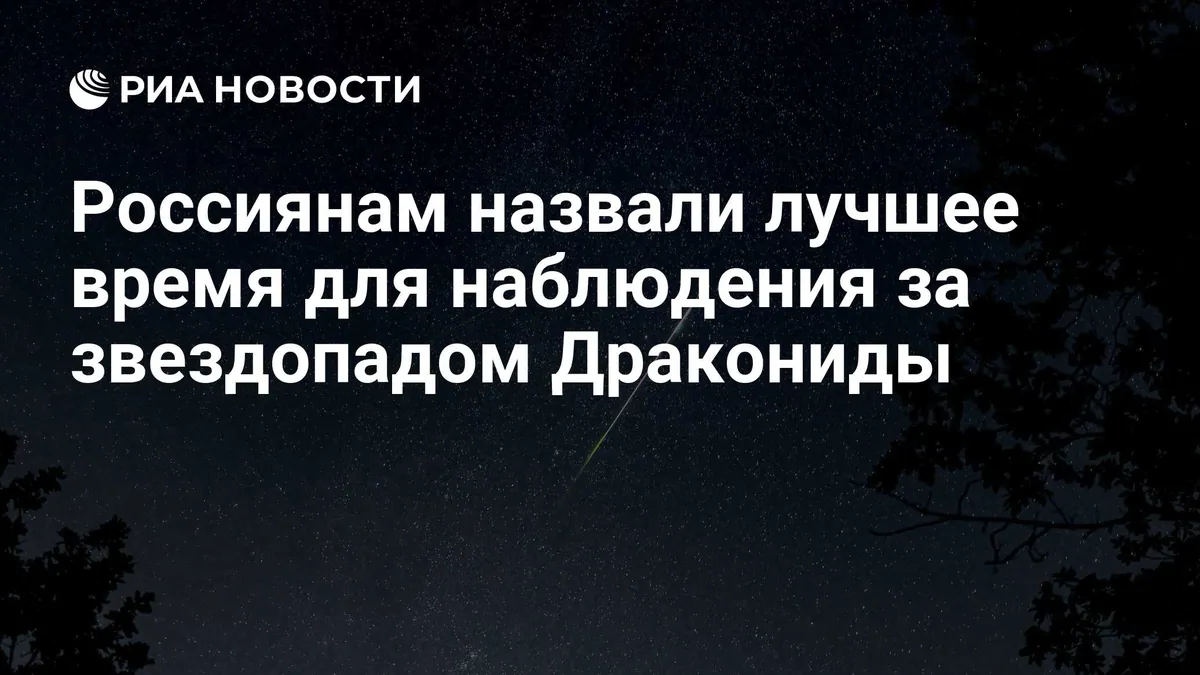
The Moscow Planetarium has named the evening of October 8 and the night into October 9 as the best time to watch the Draconids. The peak is expected around 4 a.m. Moscow time, though visibility will depend on cloud cover and location.
The expected rate is 5 to 15 meteors per hour, the planetarium’s press service told RIA Novosti. Russian space outlet Pro Kosmos cited the same estimate and forecast peak around 4 a.m. on October 9. The International Meteor Organization also lists October 9 as the shower’s maximum.
The Draconids can sometimes produce short-lived bursts. The planetarium said activity can rise to 100 to 400 meteors per hour in some periods. A brief outburst in 1998 reached 700 per hour. Those historical bursts do not mean that the same activity will return this year.
After sunset, the radiant lies high above the northwest horizon near the asterism Draco’s Head, then moves toward the north by morning. Observers are advised to choose a location away from city lights and check the cloud forecast.