
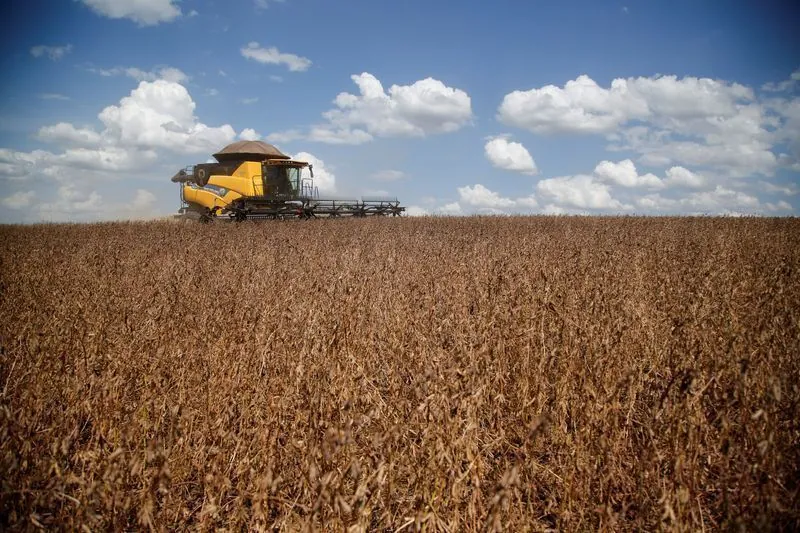
At the start of Brazil's 2026/27 soybean season, excess rain in the south may disrupt fieldwork while irregular moisture is limiting planting farther north.
Recent rain in Paraná improved soil moisture and helped planting advance. But frequent and heavy precipitation could narrow the window for field operations and make it harder for machinery to enter fields.
In Mato Grosso, Brazil's largest soybean-producing state, planting on rain-fed land remains limited. Some areas lack sufficient moisture, although rainfall has allowed work to begin in isolated locations. Rainfall patterns over the coming weeks will be important for germination and crop emergence.
Patrícia Cassoli, a meteorologist with Ampere Consultoria, said soil moisture was helping planting in south-central areas, while producers in central-northern regions were watching for more regular rainfall.
Through the end of the first half of October, Mato Grosso is forecast to receive irregular rainfall, with totals of up to 40 millimeters, mainly in the state's west and south. Paraná is expected to see thunderstorms and heavier rain, with accumulations that could exceed 100 millimeters.
The contrast leaves southern producers facing possible temporary stoppages because of excess moisture, while farmers farther north need more consistent rain.