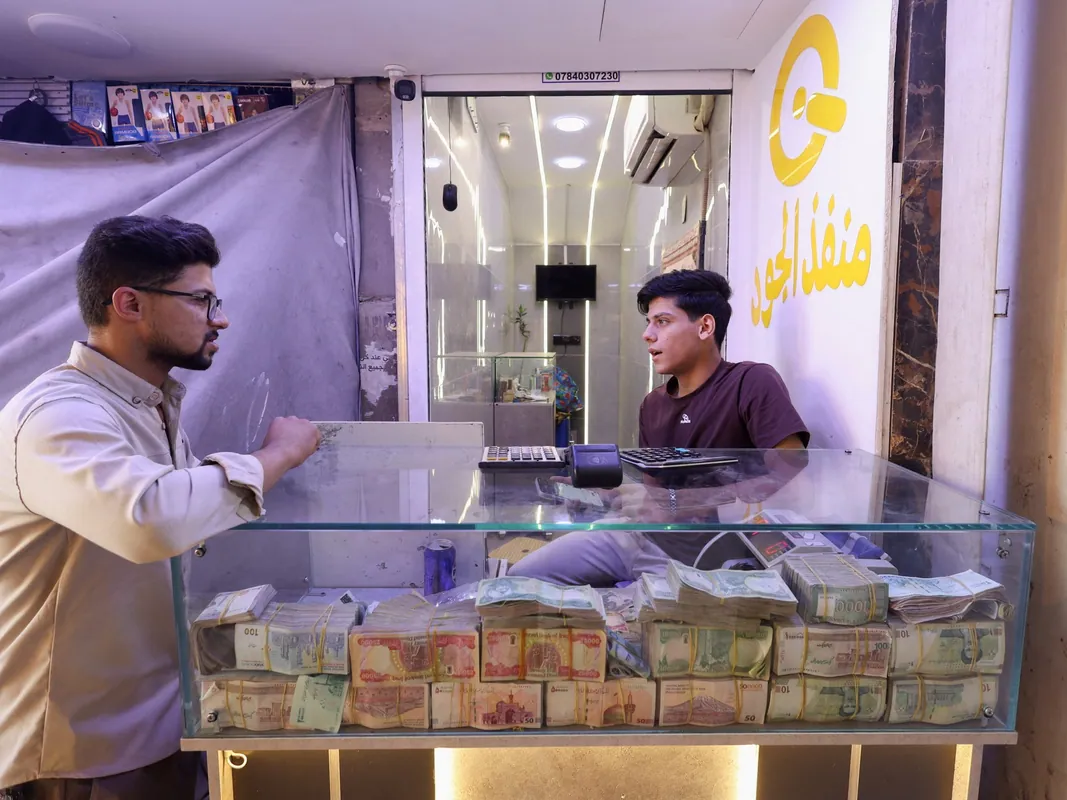
The new rate raises the price of a dollar for consumers to 1,520 dinars. The government expects to receive more dinars from oil income, while lawmakers warn of higher prices and lower household purchasing power.
Iraq’s Cabinet approved the revised exchange rates on Tuesday after an emergency recommendation from Finance Minister Falih al-Sari and the central bank governor. From Wednesday, banks and exchange companies have been selling dollars to the public for 1,520 dinars, 200 dinars above the previous rate. The Associated Press reported that the official rate at which the Finance Ministry sells dollars is 1,500 dinars per dollar.
The change comes as oil exports face disruption through the Strait of Hormuz. AP reported that shipping disruption and the US-Iran war have widened the gap between the official exchange rate and the market price of dollars. Reuters reported that Iraq’s draft 2027 budget plans spending of 217 trillion dinars and a deficit of about 50 trillion dinars. Al Jazeera reported that oil income accounts for more than 90% of the federal budget and that central bank foreign-currency reserves had fallen to about $80 billion by late August.
A devaluation gives the government more dinars for each dollar of oil revenue, but makes imports more expensive. Most Iraqis buy dollars at the parallel-market rate, which rose above 1,700 dinars after the decision, AP reported. The change could affect prices for food, medicine and industrial materials. Lawmakers have also pointed to delays in public-sector salaries and welfare payments.
The Central Bank called the measure a strategic step to stabilize public finances. Dozens of lawmakers opposed it, saying they should have been given an explanation before the new rate took effect. They secured the cancellation of Wednesday’s parliamentary agenda so the devaluation could be debated. The finance minister and central bank governor are due to appear before parliament on Thursday.
Iraq last devalued its currency in December 2020, moving the rate from about 1,182 to 1,450 dinars per dollar. In 2023, the government strengthened the dinar to 1,320 after it had weakened to about 1,670. The latest move has revived debate over who benefits from the gap between official and parallel exchange rates.