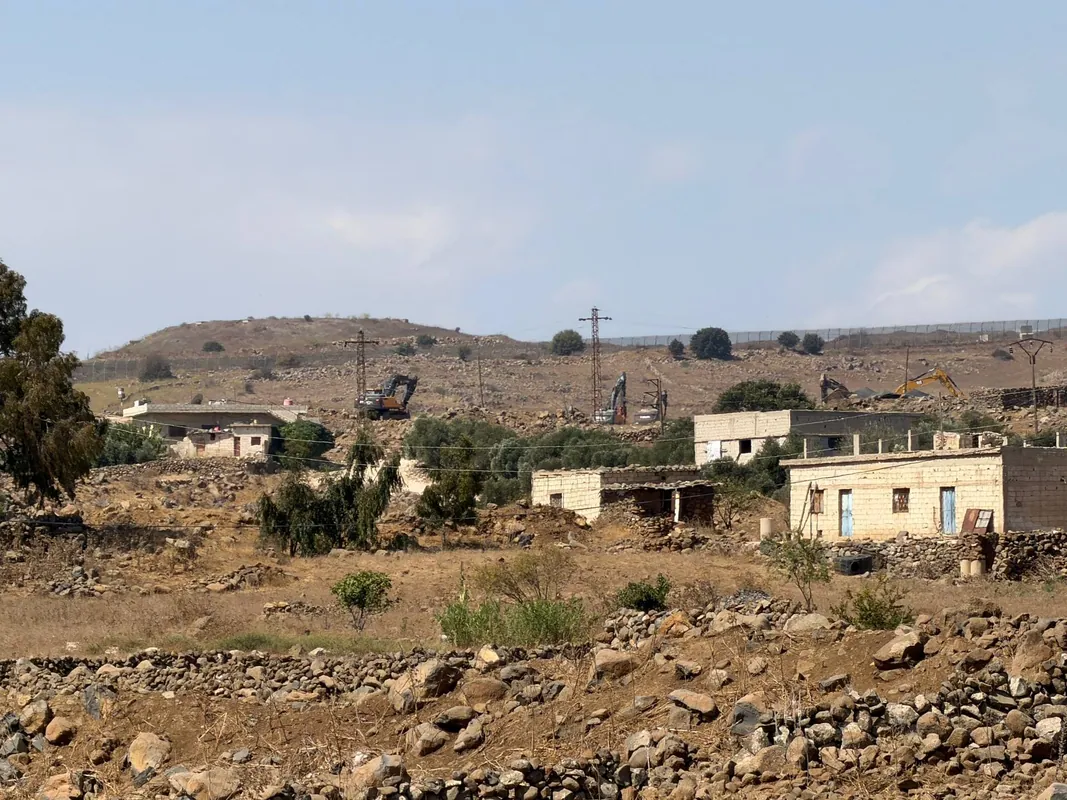
Syrian sources say Israeli forces have restarted excavation near al-Asha village for a road and fortifications inside the buffer zone.
Israeli forces resumed earthworks on October 4 near al-Asha village in southern Quneitra province, Syrian sources said. The work is linked to the Sufa 53 project, which those sources say began near Hader in 2022 and runs along the separation area beside the occupied Golan Heights. Construction accelerated in late 2024 after the fall of Bashar al-Assad’s government.
The project includes a military road about eight metres wide, earthen berms up to five metres high, trenches and observation posts. Syria’s state news agency SANA and Qatar News Agency reported machinery digging and raising earthworks near al-Asha. Israeli media, as cited by Al Jazeera, have described the route as a defensive and offensive line against possible threats from Iran and allied groups. Israel has cited security concerns and a lack of trust in Syria’s transitional authorities; Damascus says it remains committed to the 1974 disengagement agreement.
Syrian sources put the incursion into the buffer zone at 300 to 1,000 metres. The local Sijil centre said about 7,000 dunams of farmland near Jubata al-Khashab may have been taken for the project. Resident Hassan Saad al-Din Ahmad said he lost access to 16 dunams of orchard land, while about 2,000 dunams belonging to a relative’s family were also affected. Hamidiya mayor Ahmad Suleiman estimated that roughly 6,000 dunams had been affected around Hamidiya, al-Hurriya and nearby settlements.
Residents also reported damage to pastureland, fertile soil and wild trees that had supported local livelihoods. Those land estimates and accounts come from Syrian sources and local residents; they could not be independently verified in the available material. The United Nations Disengagement Observer Force (UNDOF) monitors the zone established under the 1974 agreement.