Japan launches spacecraft to return Phobos soil samples to Earth
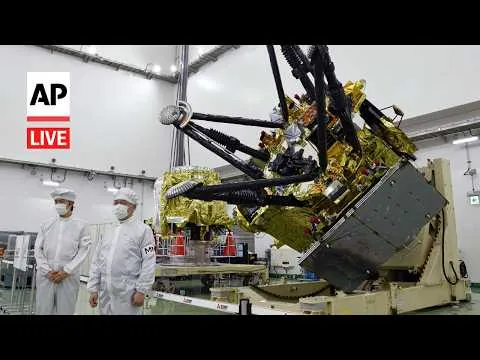
Japan launched its MMX spacecraft aboard an H3 rocket from Tanegashima Space Center. The mission aims to bring soil samples from the Martian moon Phobos back to Earth.
Liftoff occurred at 22:41 Moscow time on Monday. It was already Tuesday in Japan, where the local time was 04:41. The spacecraft has a mass of 4480 kilograms.
MMX consists of propulsion, landing and return modules. It carries seven scientific instruments, including the MIRS infrared spectrometer, LIDAR laser altimeter and NASA-provided MEGANE gamma-ray spectrometer.
The spacecraft is expected to reach Mars around August 2027. It will study Phobos and the planet's other moon, Deimos. Sampling on Phobos is provisionally planned for 2029.
Before collecting samples, MMX will deploy the 25-kilogram IDEFIX rover. It is intended to survey the surface and help select a sampling site for the main spacecraft.
The mission aims to collect at least 10 grams of soil. Its return capsule is expected to land in Australia in 2031.
Analysis of the samples' composition should help determine whether the Martian moons were captured asteroids or formed from debris after a large body collided with Mars.