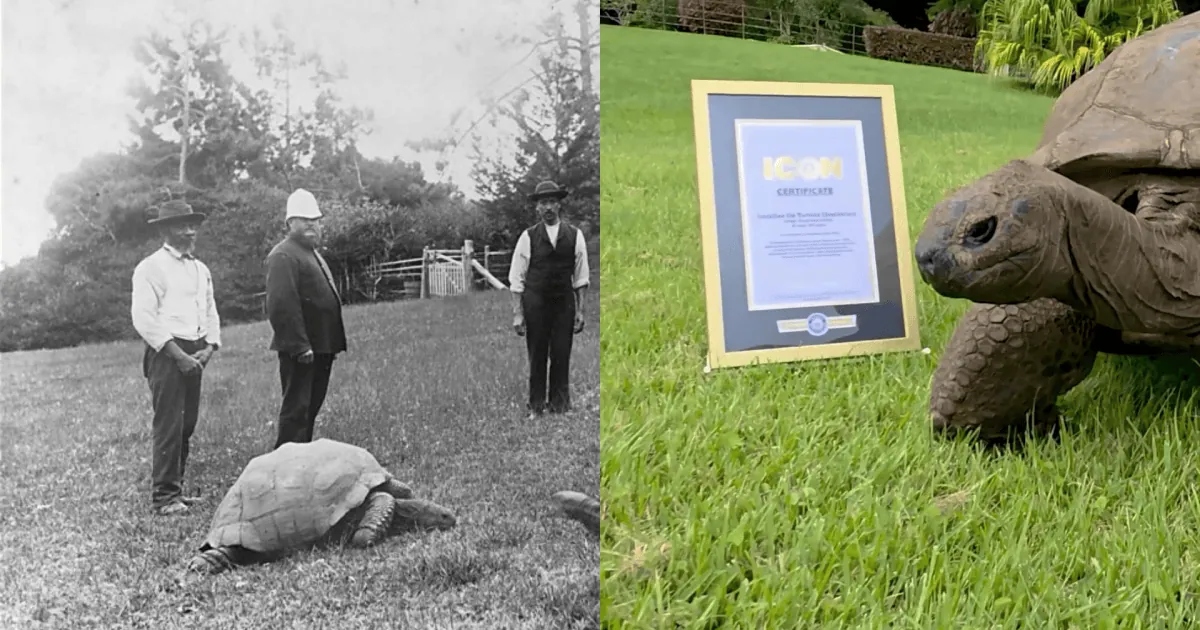
A study of Jonathan’s genome found unusual DNA methylation patterns near genes involved in mitochondria and RNA processing. The authors say the work does not establish what caused the tortoise’s longevity.
Jonathan lives at Plantation House, the governor’s residence on the island of Saint Helena. His age is estimated at about 194. Because he arrived on the island as an adult, his exact birth date is unknown.
In a study published Oct. 7, researchers analyzed his genome and methylome, the chemical marks on DNA that help regulate gene activity. They used samples from his mouth and compared Jonathan’s data with material from other giant tortoises.
The researchers found that regions with more orderly DNA methylation were more common near genes involved in mitochondrial energy production and RNA processing. They suggested that stable regulation in these regions may help cells maintain those functions.
The study describes one animal and reports associations between features of his genome and epigenome. It does not establish that those features caused his lifespan, and its findings cannot be directly applied to humans. Further work with other tortoises and functional experiments will be needed to test the hypothesis.