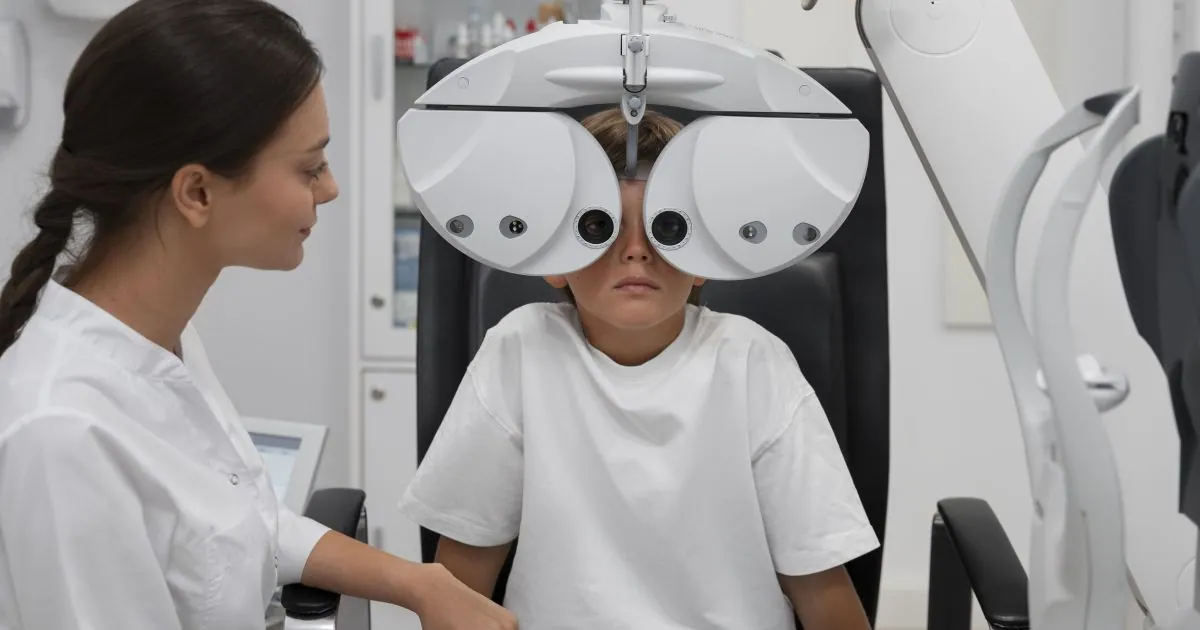
Long periods of close-up work and less time outdoors may be associated with childhood myopia, ophthalmologist Alléxya Affonso told CNN Brasil. She urged parents to watch for persistent trouble seeing at a distance, rather than treating screen-related eye strain as proof of nearsightedness.
Myopia makes distant objects look blurry. Affonso explained that it involves a change in the shape of the eyeball that affects how images focus on the retina. The World Health Organization says about 2.2 billion people worldwide have near or distance vision impairment. The WHO fact sheet does not support the source article’s separate figure of 484 million people with uncorrected myopia.
Affonso said prolonged near work, including screen use, and less time outdoors are factors to consider. She also pointed to children’s individual characteristics and family history. The evidence does not establish screen time or blue light alone as the cause of myopia.
People tend to blink less while concentrating on a screen, which can reduce eye lubrication and contribute to dryness. That discomfort does not by itself mean someone is nearsighted. Affonso said children who persistently struggle to see the classroom board or move close to objects should be examined.
To ease eye strain, the ophthalmologist recommended the 20-20-20 rule: every 20 minutes, look for about 20 seconds at something roughly 20 feet, or six metres, away. Frequent blinking and breaks can also help, but they do not replace an eye examination, especially when blurred vision persists or interferes with school.