Roscosmos presents visualisations of five objects studied by ART-XC
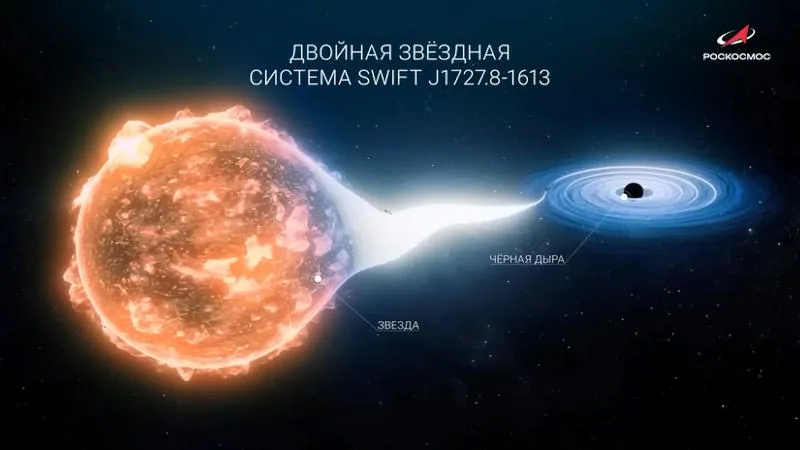
Roscosmos and ART-XC specialists have presented artistic reconstructions of five celestial objects. The images depict black-hole and neutron-star systems and a supernova studied by the Russian X-ray telescope.
Released on October 9, the series illustrates physical processes in objects observed by ART-XC in the hard X-ray band. The images are artistic representations based on scientific data rather than conventional optical photographs.
One reconstruction depicts Swift J1727.8−1613. In this binary system, a black hole draws matter from its companion star, forming a hot accretion disc. Another object, SRGA J144459.2−604207, is a rapidly rotating neutron star classified as an accreting millisecond X-ray pulsar.
The selection also includes supernova SN 2023ixf in galaxy M101 and the distant quasar SRGA J230631.0+155633. ART-XC observed early stages of the supernova explosion. The quasar contains a supermassive black hole surrounded by an accretion disc, gas and dust. The fifth object, Hercules X-1, is a binary system in which matter from a star falls onto a neutron star.
ART-XC operates aboard the Spektr-RG observatory near the Sun–Earth L2 point, about 1.5 million kilometres from Earth. According to the report, the telescope has completed eight full surveys of the sky.
Researchers are also examining whether signals from isolated pulsars could support autonomous spacecraft navigation. Such signals could eventually help spacecraft determine their position in deep space without continuous communication with Earth.

Mangaluru police report MDMA seizure from water purifier
Latest news

Trump administration seeks to resume Big Bend border construction

Ukraine's military claims strikes on three Russian missile facilities

Mumbai–Delhi trains cancelled or delayed ahead of CJP protest
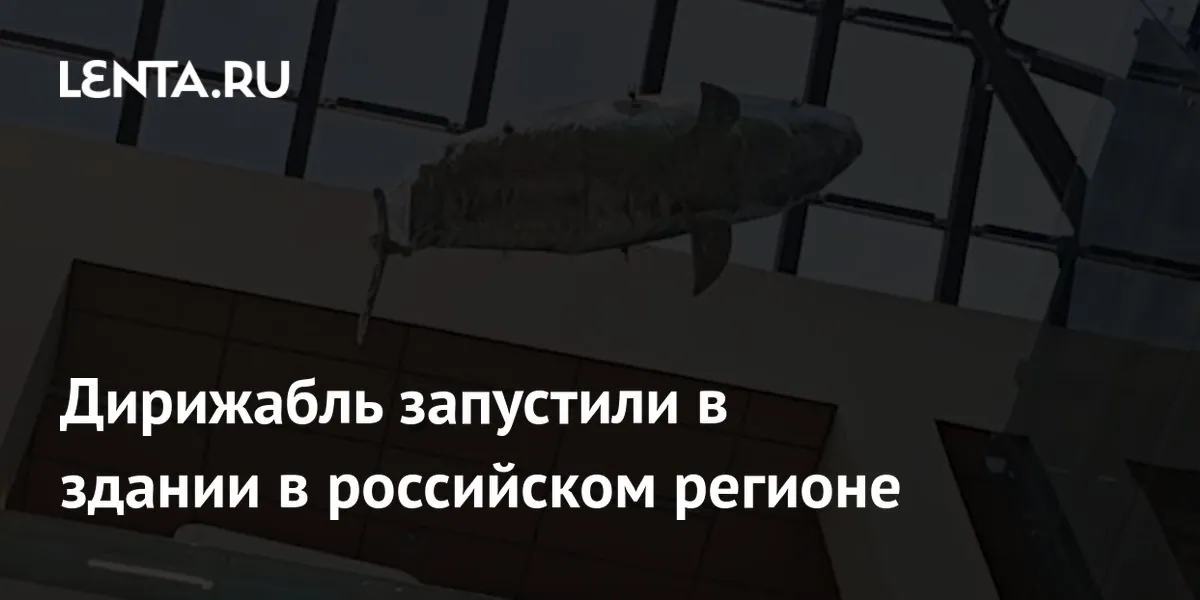
Innopolis team presents indoor airship that navigates without GPS