Subscription clubs across India are turning handwritten notes, small artworks and the ritual of receiving post into a pause from online life.
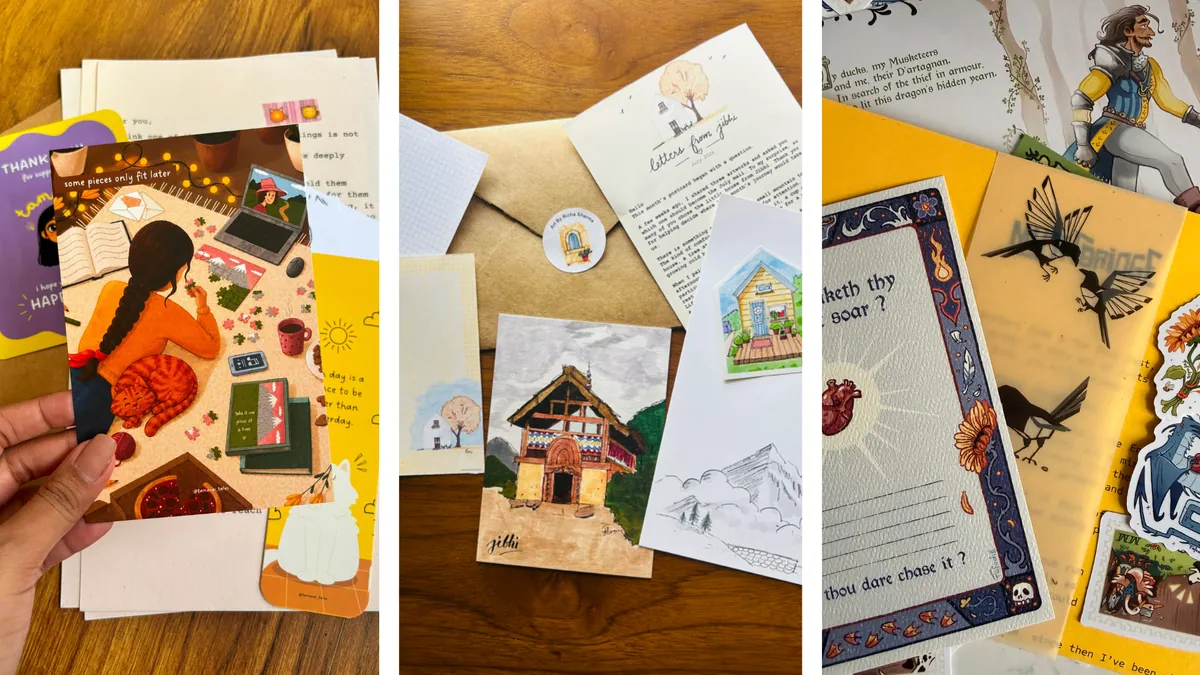
On the last weekend of each month, Coimbatore-based IT professional Sowbharanika Lakshmipathy clears her dining table and lays out letters and small paper goods for subscribers. Each issue of her Tamarai Tales project follows a theme. Parcels include handwritten letters, bookmarks, stickers and colouring sheets.
The clubs differ in format and scale. In Goa, illustrator Megha Jeevan sends members of Scratching Post her artwork, stickers, a letter and a small surprise. Other organisers focus on illustrated stationery, postcards or correspondence built around a set subject. Some projects remain small personal undertakings, while others have attracted members beyond their home cities.
For many subscribers, the experience matters as much as what is inside. A parcel can be opened slowly, read away from a screen and kept in a box or journal. Coimbatore resident Greishma Ramesh calls receiving mail a small monthly ritual. Harini, an event planner and new mother, said the letters supported her after childbirth.
Psychologist Risha Bhattacharya sees younger people’s interest in correspondence as something other than nostalgia. Many members of Gen Z and Gen Alpha did not grow up when personal letters were a routine form of communication. The physical format and slower pace can offer a contrast to digital communication and a chance to practise patience.
The deliberate effort is also part of the clubs’ appeal. Mumbai-based music programmer Bhanuj Kappal has spoken about the value of friction in a culture where everything is meant to become easier and faster. Preparing and sending a letter takes time, while a received message becomes a tangible record of another person’s attention.
The format is not limited to India. London-based Mythbridge, founded by video game producer Tomas Jauregui, has brought together about 1,800 people around fantasy-themed correspondence. The project sent its first letter in January 2025. Jauregui later made it his full-time work. Members live in the UK, elsewhere in Europe, Australia and the United States.
Letters connect this new wave of interest to an older habit of maintaining relationships across distance. Bengaluru-based editor and arts manager Manju Sara Rajan recalled writing to pen pals in West Asia during the Gulf War. Accounts of everyday life made distant events feel closer. Journalist Veena Venugopal wrote to her daughter at boarding school, and the girl’s friends became interested in the letters too.
Today, the clubs help make that exchange deliberate and regular. Organisers add illustrations and paper keepsakes, but the central element remains a letter that arrives physically and can be reread later.