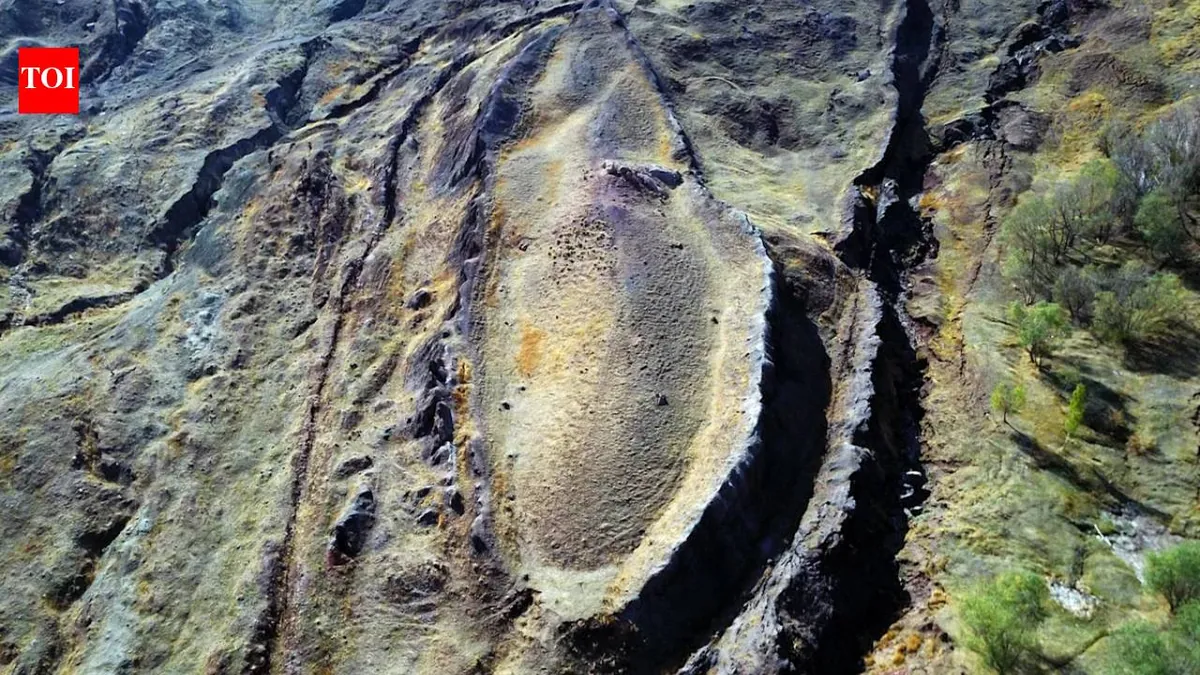
An international team has drilled at the Durupinar formation in eastern Turkey and collected soil samples for analysis. The work has not established a link between the site and the biblical Noah's Ark.
The boat-shaped geological formation near Mount Ararat has drawn researchers and Ark enthusiasts since it was identified in 1959. About 20 researchers from five countries took part in the 2026 fieldwork. They collected hundreds of samples inside and outside the formation, including from depths of about 60 feet, to look for signs of human activity or decaying wood.
Andrew Jones, vice president of the Noah's Ark Research Project, said the team encountered mostly soil rather than a solid mass of limestone or other rock. The researchers said samples from inside the formation had carbon levels about 40% higher than samples from outside. They said this might reflect more organic material, but have not shown that it came from an ancient vessel. The 2026 samples are due for laboratory analysis over the winter.
The team also found pottery fragments in the surrounding area, but none inside the formation. Researchers said the pieces might date to a period relevant to the traditional Ark timeline. A 1996 study concluded that Durupinar was a natural formation. The new investigation has not overturned that finding or confirmed that the site is Noah's Ark.