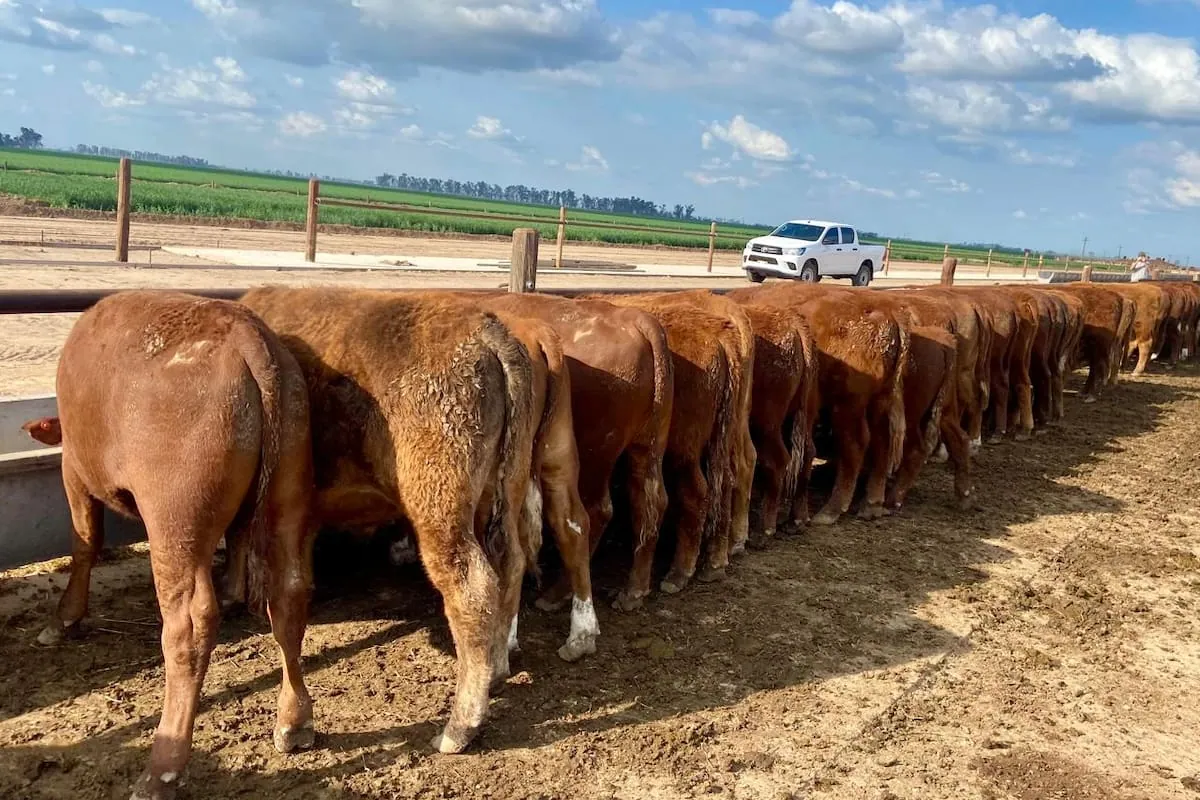
An Argentine feedlot industry group says antimicrobial residues found in soil do not show that the substances are present in beef. The dispute followed a call by Ireland’s farmers’ association for the European Commission to restrict Argentine beef imports.
The study, published in September in the journal Antibiotics, examined soil collected from 27 commercial feedlots between 2021 and 2023 and tested for 15 antimicrobials. It was part of an Argentina-UK cooperation program on antimicrobial resistance in the environment. Assessing meat safety was not among its aims.
Researchers found monensin at all 27 sites, with concentrations above 15,000 parts per billion at some locations. Other drugs, mainly tetracyclines, were detected at 70% of the feedlots. Oxytetracycline levels at one site approached 14,000 parts per billion.
At 40.7% of the sites, the researchers found compounds absent from the available treatment records. They included oxytetracycline, tulathromycin, cefquinome, enrofloxacin and ciprofloxacin. The authors did not identify a single explanation. They cited possible long-term persistence in soil, manure redistribution, incomplete records, off-label use or cross-contamination.
Fernando Storni, president of the Argentine Feedlot Chamber, told La Nación that the study found residues in soil, not meat. He said antibiotics are not completely metabolized by animals, so their presence in soil is expected. Results varied within feedlots, he added, with higher levels in receiving pens where newly arrived animals undergo veterinary treatment.
The Irish Farmers’ Association used the findings to urge the European Commission to extend restrictions applied to Brazil to Argentine beef. It said the study raised questions about compliance with European antimicrobial standards. Storni said the comparison was misplaced because the research examined soil.
Argentina banned the use and sale of veterinary antimicrobials intended to promote animal growth, improve performance or increase feed efficiency in 2024. The rules retain exceptions for some feed additives, including monensin. Argentina’s National Service for Agrifood Health and Quality, known as Senasa, also runs a residue and contaminant monitoring plan for food sold domestically or traded internationally.
An industry representative said the findings could prompt a review of farm practices and further research into antimicrobial resistance.