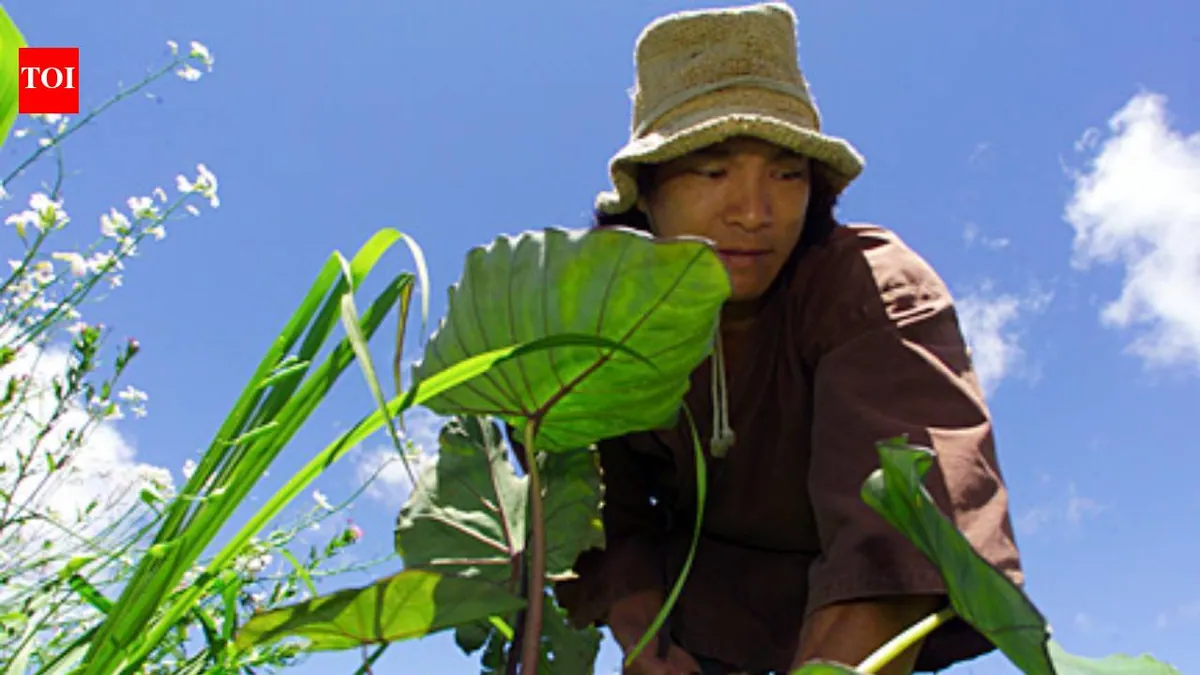
In a 2005 Honolulu Star-Bulletin profile, the actor described settling on 25 acres on Hawaii’s Big Island and trying to restore parts of its cleared rainforest.
Lee bought the land near Volcano about six years before the interview was published. Much of it had been cleared, with old paint cans, car parts and other debris scattered around. The actor and a friend built a modest two-room house there.
The home had no conventional electricity, hot water or flush toilet. A 12-volt battery supplied electricity, and a solar panel powered a water pump. Lee cooked on a wood-burning stove, grew taro and kept chickens.
His approach to farming was influenced by Japanese farmer and philosopher Masanobu Fukuoka, who advocated natural farming. Lee collected koa seeds in the surrounding forest and replanted them on his property in an effort to restore the tree canopy.
Lee did not give up acting. He said he wanted to choose projects on his own terms and return to Hawaii between film jobs to work on the land and his theater plans.
He called the property Pu Mu. The profile said the name represented “simplicity” and “nothingness.” Lee hoped to create a small venue there for plays, workshops and classes, bringing together theater, farming and environmental work.