Trading value nearly tripled month on month after market reforms took effect. Analysts say sustained growth will depend on institutional participation and broader use of hedging instruments.
Derivatives trading on the Saudi Exchange (Tadawul) reached SAR 1.15658 billion in September, up from SAR 404.86 million in August and SAR 280,000 in July. The market was inactive in the first half of the year. September saw 26,510 contracts and 5,526 deals. Over nine months, trading totaled 36,237 contracts worth SAR 1.56171 billion across 7,518 deals.
The increase followed structural changes that took effect on August 19. Saudi Exchange and clearing company Muqassa said the updates covered MT30 Index and single-stock futures, the market-making framework, trading and clearing fees, margin requirements and contract specifications. Argaam reported that futures transaction and final-settlement fees were waived for one year.
Abdullah bin Sami Al-Salloum, a professor of finance and investment at Imam Mohammad Ibn Saud Islamic University, linked the rise to improved market making and lower costs. He said futures value rose from SAR 280,000 in July to about SAR 405 million in August, then to SAR 1.16 billion in September, an increase of about 186% month on month. Qaisar Noor, managing partner at RSM Strategy KSA, said trading volumes alone do not establish market development. Open interest, market depth and the durability of liquidity also matter.
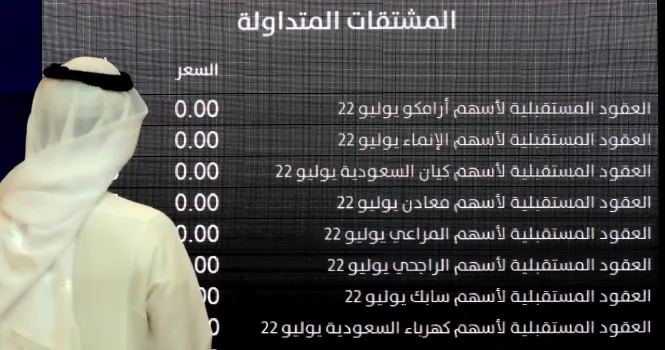
MT30 Index futures accounted for about 90.6% of September's derivatives value, or SAR 1.048 billion. Single-stock futures contributed SAR 108.75 million, or 9.4%. No stock options traded. Maaden led single-stock futures with SAR 51.39 million, followed by Al Rajhi Bank, stc, Saudi National Bank (SNB) and Saudi Aramco. Several other listed shares saw no futures trading.
Al-Salloum expects single-stock futures to attract more activity as institutional investors participate. Noor said a broader participant base, more active market makers and further infrastructure development will be needed. He cautioned that higher trading value does not necessarily mean a matching rise in open interest or durable hedging demand.
Options remain inactive because they are more complex to price and liquidity is split across strike prices and expirations. The analysts said the market first needs deeper liquidity in underlying futures and a stronger risk-management ecosystem. MT30 is the MSCI Tadawul 30 Index, comprising about 30 of Saudi Arabia's largest and most liquid stocks. Unlike a futures contract, an option gives its buyer the right, but not the obligation, to trade at a specified price.