
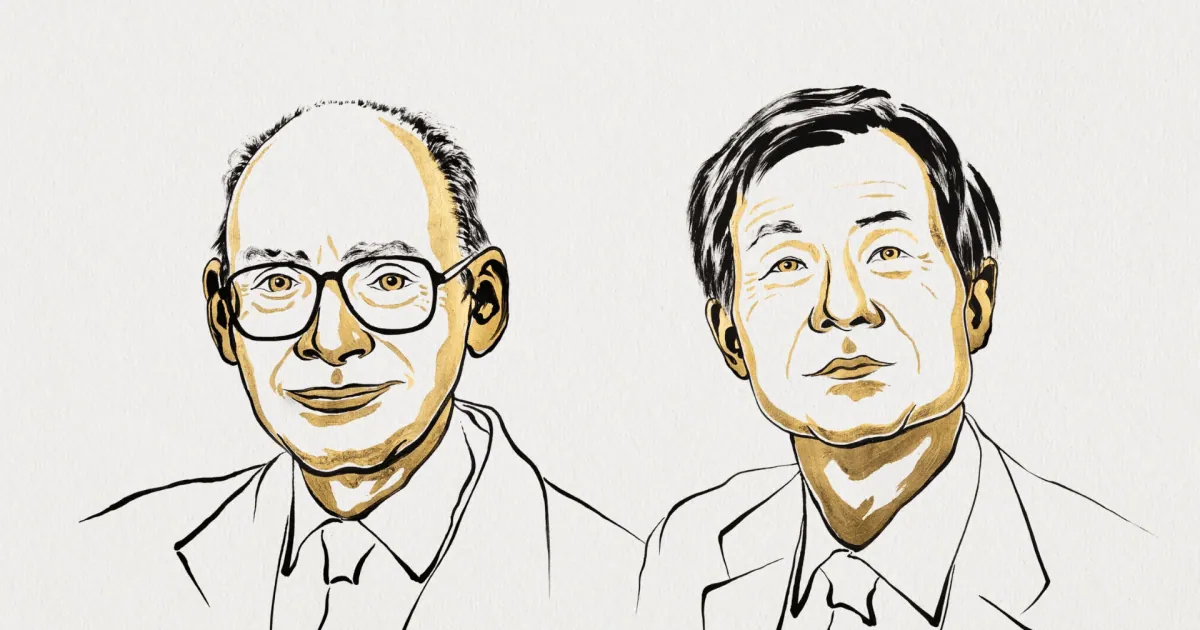
The researchers were awarded for discoveries in asymmetric organic synthesis that help explain how chemical homochirality can emerge.
The Royal Swedish Academy of Sciences announced the laureates in Stockholm on Wednesday, October 7. Henri Kagan and Kenso Soai will share the prize of $1.2 million.
Many molecules, including amino acids, occur in two mirror-image forms. Living organisms, however, use only one of them in their proteins, while the other is rarely found in nature. Chemists had long sought to understand how homochirality arises and how to steer reactions toward the desired form.
Kagan took an important first step in 1986 by finding a way to manipulate reactions so that one mirror form could be produced in greater excess. Soai advanced the work. In 1995 he described a reaction with the potential for homochirality, and in 2003 he achieved a reaction that formed only one of the two possible mirror forms.
Heiner Linke, chair of the Nobel Committee for Chemistry, called the work a solution to a mystery more than a century old. The discoveries matter for chemists designing reactions to make pharmaceuticals, since a molecule's mirror form can determine its desired effect. The award ceremony will be held in Stockholm on December 10.