
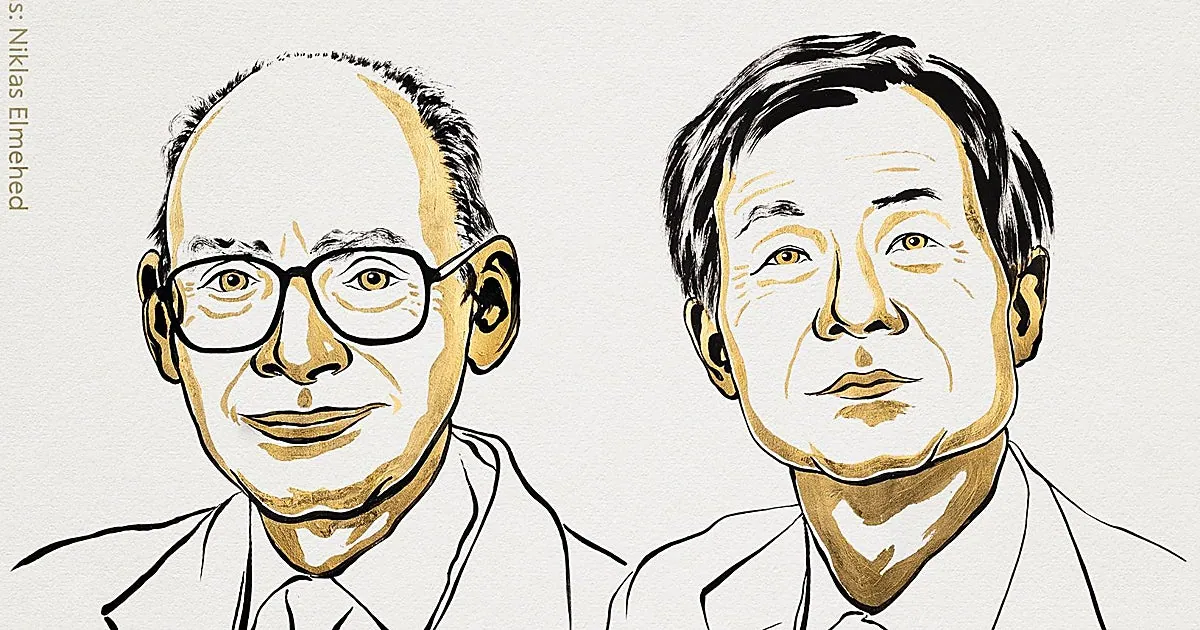
The 2026 award recognizes research in asymmetric organic synthesis that helps explain how chemical reactions can produce a predominance of molecules with one mirror-image form.
Many molecules exist in two forms related like a left and right glove. In living organisms, amino acids and sugars are usually represented predominantly by one of these forms. The phenomenon is known as homochirality.
In 1986, Kagan showed how a small initial difference between mirror-image forms could be amplified in a reaction through asymmetric catalysis. In 2003, Soai demonstrated an autocatalytic reaction in which one form of a product helps generate more molecules of the same form.
These methods became tools for synthesizing substances with a chosen molecular structure. They are used in developing medicines, flavorings, agrochemicals and some new materials. The prize is awarded by the Royal Swedish Academy of Sciences.